 Verdex
Microplastic counts from Long Island’s coastal waters.
Verdex is a student-run sampling effort. We record microplastic particle counts across Long Island’s coastal waters under a published, version-locked protocol.
Every session, logged.
Sessions appear here whether the counts are interesting or not. Blank results and zero counts stay in the record — removing them would make the dataset a highlight reel.
One protocol, version-locked.
The Verdex Sampling Standard (VSS) v1.1 is adapted from NOAA marine-debris monitoring guidance. It was locked before Session 1 so that sessions stay comparable to one another.
Collect
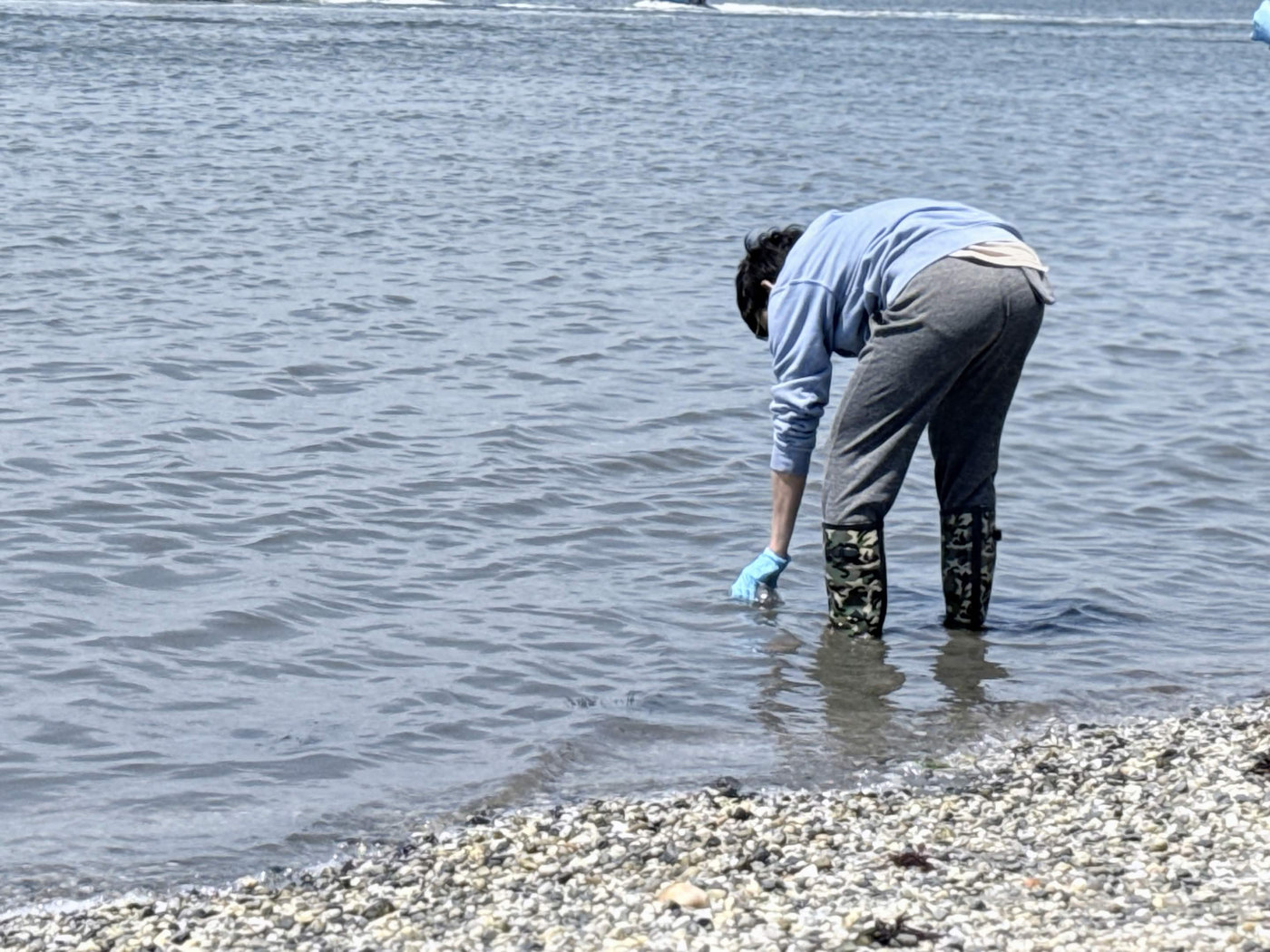
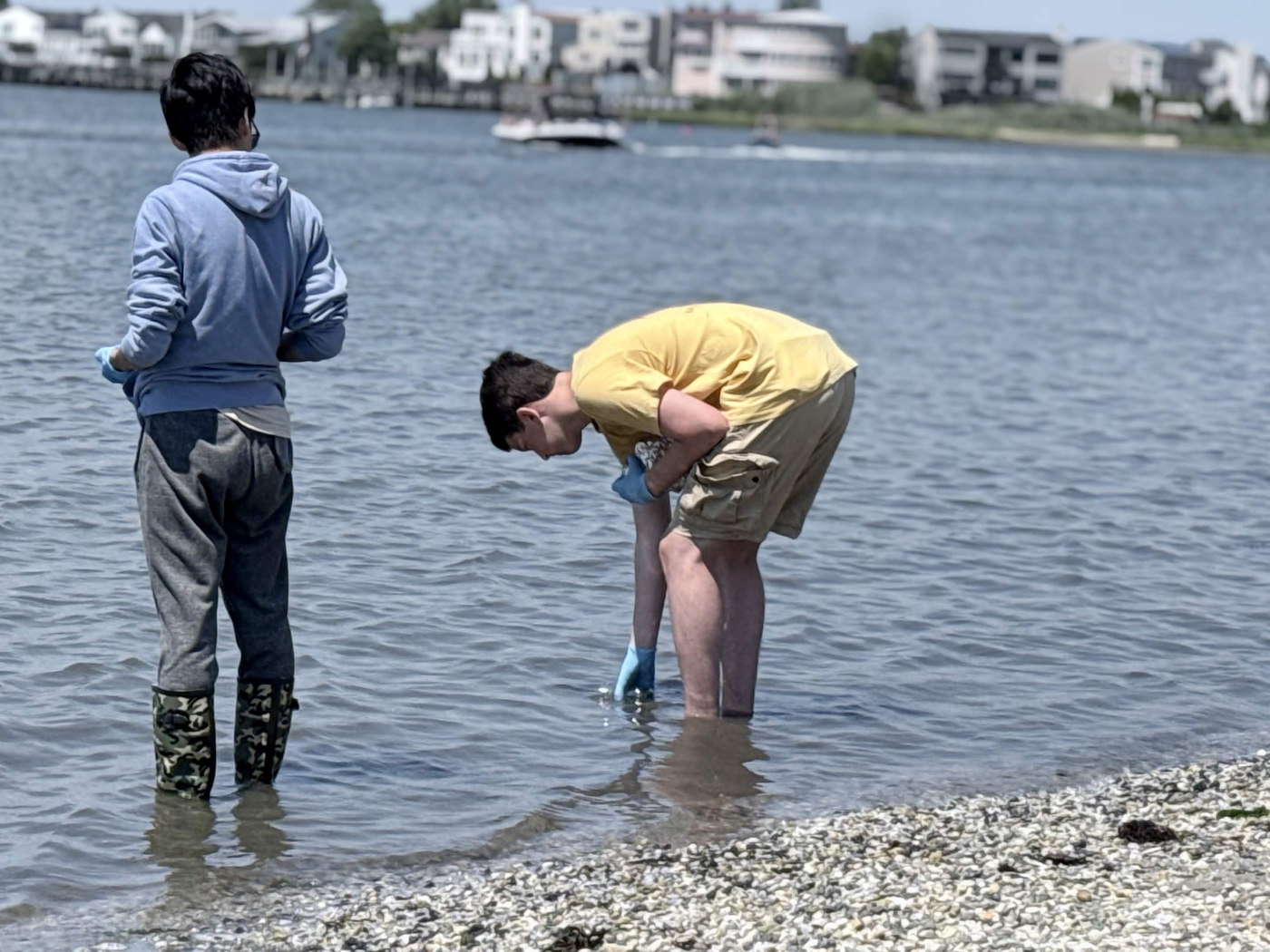
Surface grab samples in pre-rinsed glass jars, rinsed three times in source water before filling. Nitrile gloves throughout. Site, time, tide stage, and weather recorded on the field sheet at the moment of collection.
Blank
A procedural blank is opened and handled alongside the real samples at every session from Session 1 forward. If the blank is dirty, the session's counts are reported with that blank value attached — never quietly dropped.
Filter
Samples are vacuum-filtered onto a 100 µm mesh in a covered workspace with foil-lined trays, then dried before examination.
Count
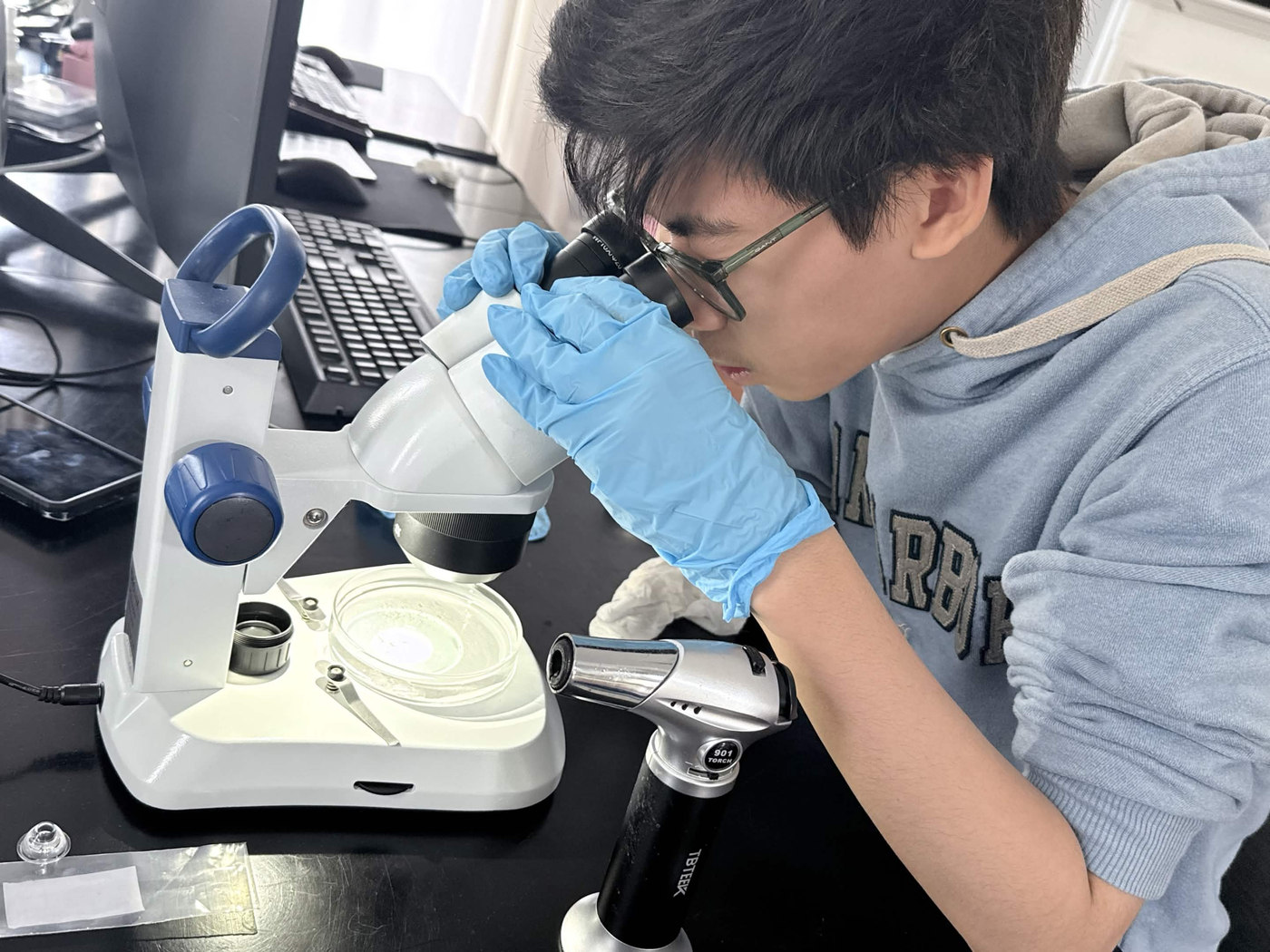
Particles are counted and typed as fiber, fragment, film, foam, or pellet under an Accu-Scope EXS-210-13 stereo microscope, with a hot-needle check on ambiguous particles. Counts and photos are entered into the Verdex sheet the same day.
Single-team disclosure
All samples to date were collected, processed, and counted by one team using one protocol. No independent laboratory has re-counted a Verdex sample, and inter-observer agreement has not yet been quantified. Counts are visual identifications, not polymer confirmations.
Verdex will not recruit additional teams until it has completed six consecutive protocol-compliant sessions and closed at least one external methodology review.
Where the protocol stands.
Status is reported exactly as it is. Nothing on this page claims an endorsement, a partnership, or a use of Verdex data that hasn't happened.
| Name | Affiliation | Status |
|---|---|---|
| Dr. Luis Medina Faull | School of Marine and Atmospheric Sciences, Stony Brook University | Methodology review returned · revision to v1.2 in progress · meeting agreed, date pending |
| Cassidy Freudenberg | Conservation and Waterways, Town of Hempstead | VSS v1.1 sent July 17, 2026 · no reply to date |
| Office of NY State Senator Steven D. Rhoads (SD-5) | Sandra VonRunnen, Director of Constituent Affairs | Met with founder June 17, 2026 · Q2 report received |
| Office of NY State Assemblyman David G. McDonough (AD-14) | Vicky Johnson, Director of Constituent Affairs | Correspondence ongoing since May 2026 |
| Dr. Jaymie Meliker | Program in Public Health, Stony Brook University | Research mentor to the founder |
| Aiden Tran | Verdex — internal methodology review | Contributed source-water rinse, foil liner, and tide/weather fields to VSS v1.1 |
No organisation listed above has used, endorsed, or cited Verdex data. Review returned means a document was reviewed and feedback sent back. Nothing more is claimed until there is a receipt for it.
Who runs Verdex.
Verdex is an independent student project based in Bellmore, New York. It is not affiliated with, sponsored by, or representative of any school or district.
Joshua Sat
FounderAuthored the VSS Protocol. Leads project strategy, stakeholder outreach, and data operations.
Aiden Tran
Field Operations LeadRuns field execution and reviews methodology. Background in environmental science across birds, water, and soils.
Chloe Pan
Communications & Outreach LeadLeads volunteer coordination, recruiting, and outreach infrastructure. Contributed to succession planning.
Field members credited by documented per-session contribution.
Brandon Chan
Data RecorderMaintains the VSS field data sheets, logs collection times, and checks protocol adherence during each session.
Antonio Terzulli
Data CollectorRuns field collection to the VSS methodology and helps onboard new samplers to the process.
Liam Sullivan
Data CollectorRuns field collection to the VSS methodology and helps onboard new samplers to the process.
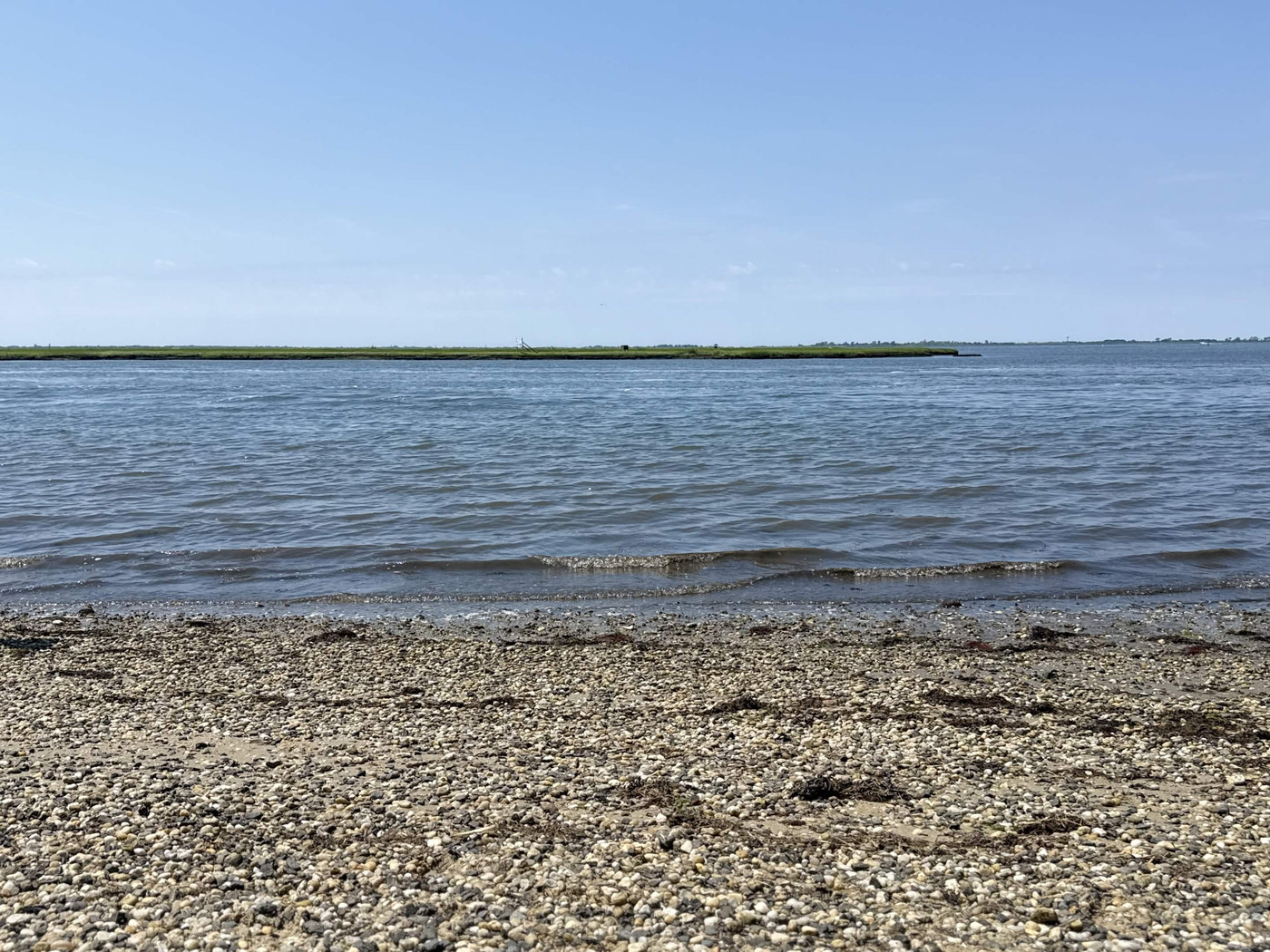
From the water to the scope.
Want the raw data?
Session sheets, the full VSS v1.1 protocol document, and blank results are available on request to researchers, agencies, and educators.